 Impact Stories
From Cocoa Production to Climate-Resilient Livelihoods: How Dadugba Cooperative is Transforming Smallholder Farming in Sierra Leone
In Sierra Leone’s Kailahun District, cocoa farming remains a critical source of livelihood for rural households. However, smallholder farmers continue to face structural barriers that limit productivity, income stability, and value retention within the cocoa value chain.
Fragmented production systems, limited access to improved inputs, and weak market integration mean that most farmers sell cocoa in its raw form, with minimal opportunity to capture additional value.
For many communities, cocoa husks, despite their potential, are discarded as waste.
As Patrick Musa Tucker explains:
“We realized that farmers were producing cocoa for years, but not necessarily building wealth from it. Even the waste had value, but no system existed to capture it.”
THE RESPONSE: BUILDING A FARMER-LED SYSTEM
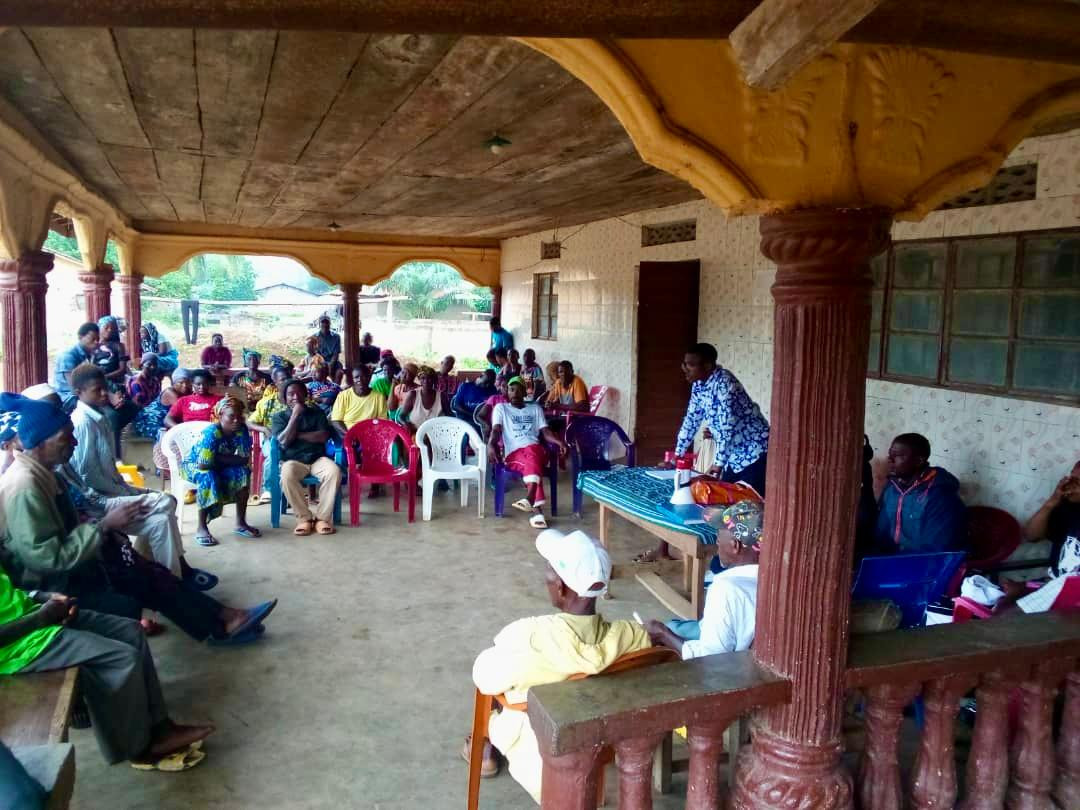
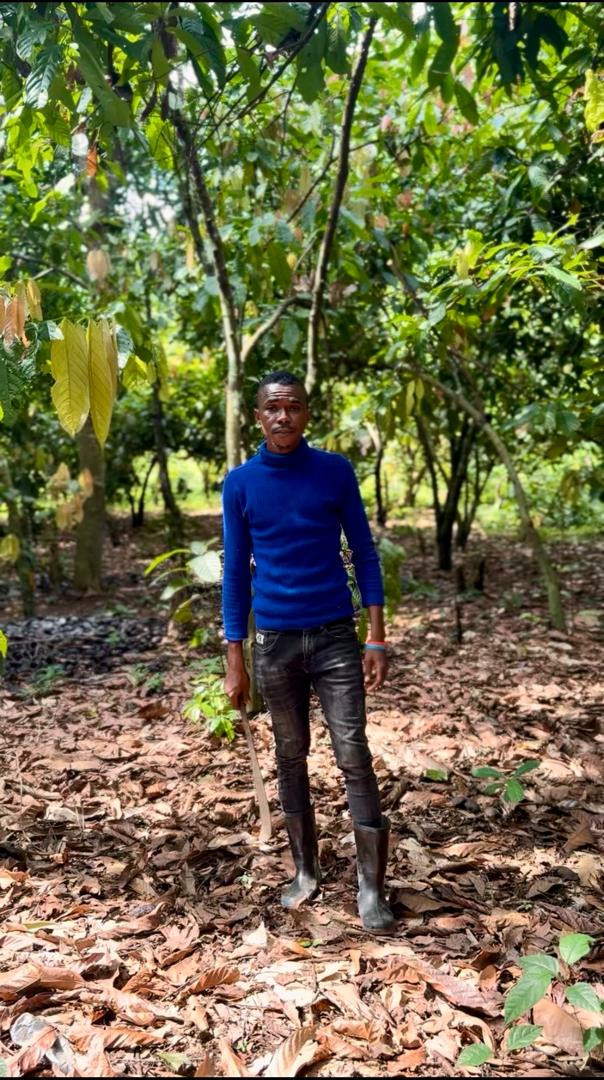
To address these challenges, Patrick Musa Tucker founded the Dadugba Farmers’ Cooperative, a farmer-centered model designed to strengthen production systems, improve coordination, and expand value addition within the cocoa sector.
Today, the cooperative works with approximately 2,000 smallholder farmers across 25 villages in Kailahun District.
Its approach combines agricultural organization with climate-smart innovation and local processing systems.
Patrick reflects on the vision behind the cooperative:
“Dadugba was never just about cocoa production. It was about building a system where farmers are not the weakest link in the value chain.”
TRANSFORMATION APPROACH
1. Climate-Smart Cocoa Production
The cooperative promotes improved farming systems through:
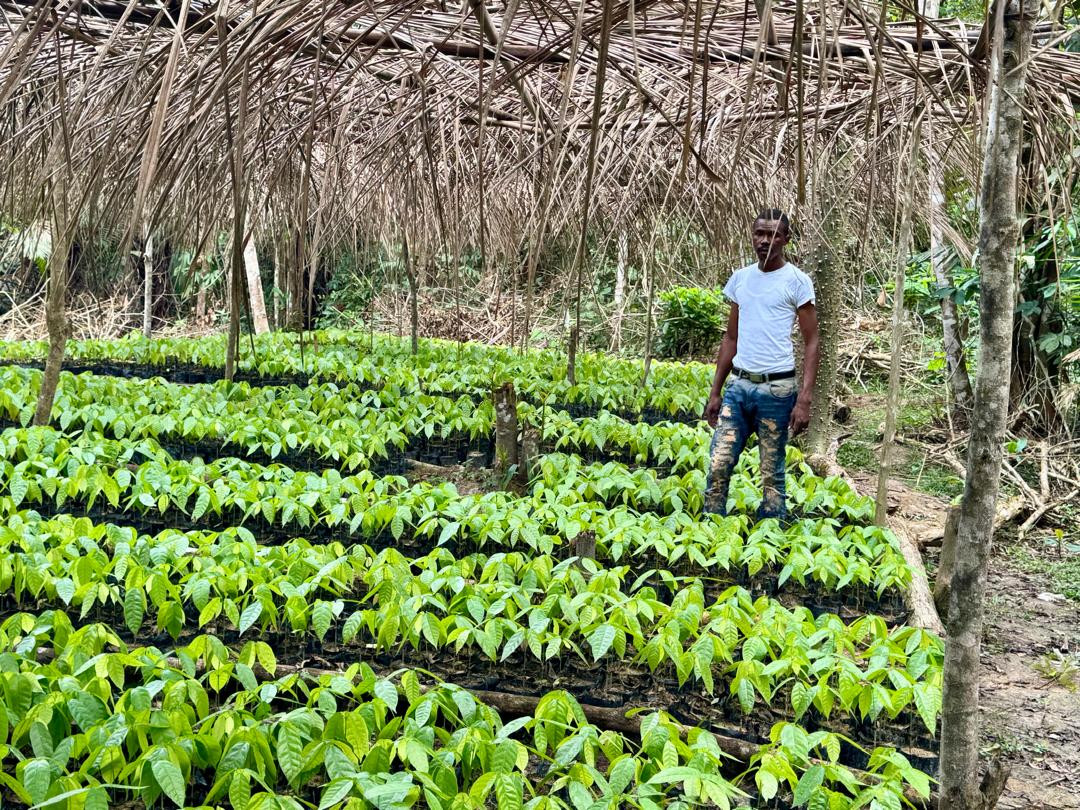
- hybrid cocoa seedlings
- Rehabilitation of aging farms
- training in sustainable agricultural practices
These interventions aim to improve productivity while strengthening resilience to climate variability.
2. Circular Economy Innovation
One of the most significant innovations introduced by Dadugba is the repurposing of cocoa by-products.
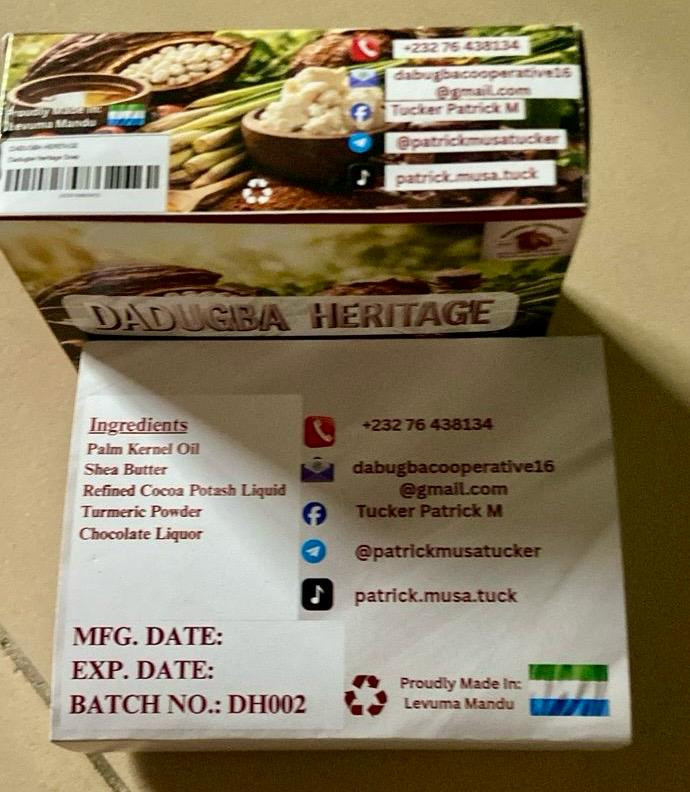
Cocoa husks, previously discarded, are now transformed into inputs for Dadugba Heritage Soap, produced with locally sourced ingredients including shea butter, turmeric, and lemongrass oil.
Patrick describes this shift simply:
“What used to be waste is now part of our value chain. Nothing from the cocoa tree is wasted anymore.”
This model introduces a circular economy approach that links agriculture, waste reduction, and rural enterprise development.
3. Farmer Organization and Market Access
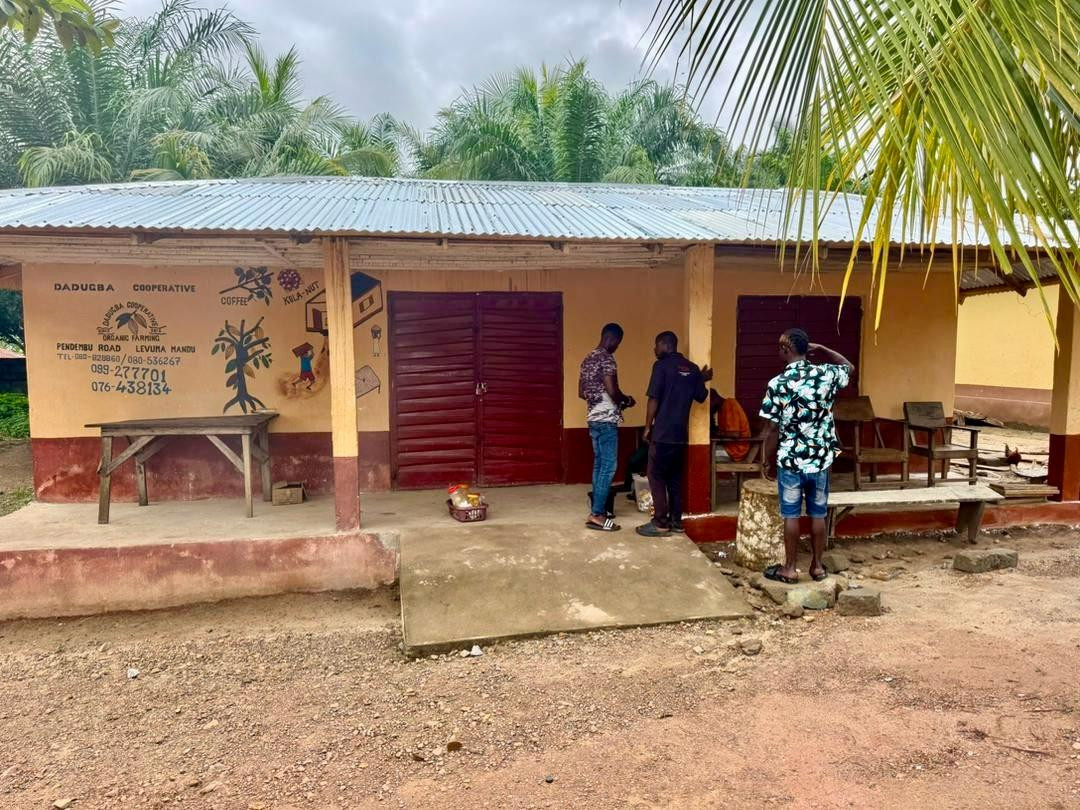
Through its cooperative structure, Dadugba aggregates production from smallholder farmers and improves access to structured markets.
This strengthens farmers’ bargaining position and improves coordination across villages.
THE TURNING POINT: SYSTEMS STRENGTHENING THROUGH AFC
A significant phase in Dadugba’s evolution came through engagement with African Food Changemakers (AFC), which supported institutional strengthening and systems development.
Rather than changing the cooperative’s mission, AFC helped refine its structure, clarity, and scalability.
Patrick notes:
“AFC helped us see our work differently—not just as farming activity, but as a system that can be structured, measured, and scaled.”
Through AFC initiatives such as BRACE, Dadugba strengthened:
- Its climate resilience strategy
- Internal reporting and organizational systems
- Long-term growth planning
AFC also expanded Dadugba’s visibility within a broader African agrifood ecosystem, connecting the cooperative to new conversations around sustainable agriculture and investment readiness.
AFC AMBASSADORSHIP: IDENTITY AND POSITIONING SHIFT
One of the most significant shifts has been Patrick’s appointment as an AFC Ambassador, which has repositioned him from a local cooperative leader to a recognized voice within Africa’s agrifood ecosystem.
This designation has had three key effects:
1. Strengthened trust and legitimacy with external stakeholders, positioning Patrick as a validated agribusiness leader, representative voice of smallholder innovation, and a contributor to continental food systems dialogue
2. Expanded Dadugba’s visibility beyond local and national boundaries.
3. The ambassadorship has enabled stronger engagement with partners and stakeholders and participation in broader ecosystem dialogues on sustainable agriculture
Patrick notes:
“Being an AFC Ambassador has strengthened how people see our work. It carries weight when engaging partners and communities beyond Sierra Leone. It has positioned me to speak not just for Dadugba, but for what smallholder farmers in our region are building.”
Following these developments, Dadugba Cooperative has experienced early institutional strengthening:
- Improved internal financial systems
- Clearer strategic direction
- Stronger coordination across farming communities
- Increased external engagement opportunities
While long-term impact measurement is ongoing, early indicators suggest improved system coherence and farmer participation.
FUTURE GROWTH TRAJECTORY
Dadugba Cooperative is now focused on scaling its model through:
- Establishment of semi-industrial processing infrastructure
- Expansion of block farming systems
- Strengthening export readiness for cocoa markets
- Integration of digital tools for farmer finance and data systems
Patrick frames the next phase of growth as:
“Our goal is not just to grow production, but to build a system that can sustain farmers beyond one season or one market cycle.”
WHY THIS MATTERS
The evolution of Dadugba Cooperative demonstrates how farmer-led institutions can transition toward more resilient and inclusive agricultural systems when supported by structured ecosystem interventions.
In this model, cocoa is no longer only a commodity crop.
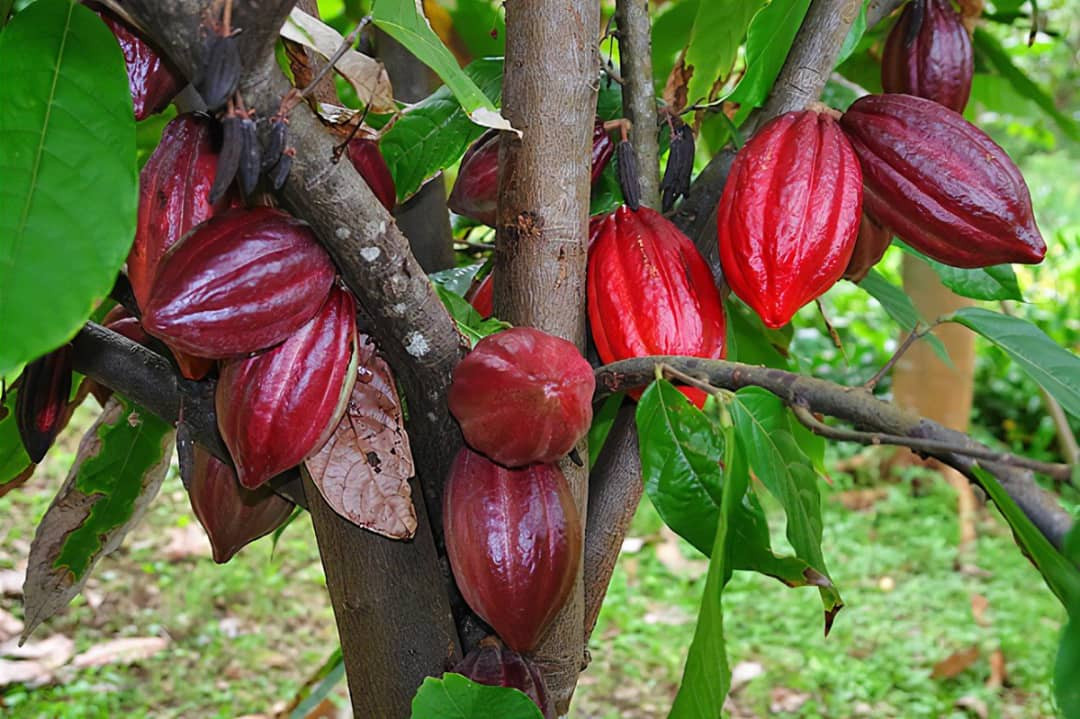
It becomes a foundation for climate resilience, rural enterprise development, and circular economy innovation.